Reverse osmosis in Tulsa: what it reduces, what it costs and who needs it
Reverse osmosis is the one treatment that reduces what is dissolved in water: lead, arsenic, fluoride and total dissolved solids. Here is what it does at the kitchen tap, what is worth reducing in Tulsa-area water, and what a system costs.
Reverse osmosis is the treatment people mean when they want the water in their glass to be different from the water in their shower. This guide sets out what it reduces, what it does not, and what it costs for a home in the Tulsa metro.
What reverse osmosis does
Water is pushed through a membrane fine enough that the water passes and the dissolved contaminants are left behind and flushed to drain. That matters because lead, arsenic, fluoride and total dissolved solids are not particles. There is no pore small enough to catch them and nothing for them to stick to, which is why no whole-home filter reduces them. Reverse osmosis is the mechanism that does.
The independent standard for reverse osmosis drinking water systems is NSF/ANSI 58. When you compare units, look for that certification and for the list of contaminants it names.
Why it belongs at the kitchen tap
Reverse osmosis belongs at the tap you drink and cook from rather than on the main line, because that is the water those contaminants actually matter in. A storage tank behind the faucet means the glass fills at the speed you expect rather than at the speed the membrane works.
Chlorine, chloramine, sediment and scale are a different job, done at the main for every tap. That is covered in our guide to whole-house filtration in Tulsa.
What is worth reducing in Tulsa-area water
Lead mostly reaches tap water from the solder and fittings in a particular house, and no treatment decision a city makes changes what those release. That is why the town reports are worth reading closely. Owasso’s most recent published lead round found one sampled site above the federal action level. In Sand Springs one house sampled at 279 parts per billion. The control that works is at the tap.
Nitrate is the other dissolved contaminant people ask about, especially households on a private well. Boiling concentrates it rather than reducing it, and our piece on nitrate explains why. For Tulsa’s own figures, read our read of the 2026 water quality report, or check your utility’s results by ZIP code on the home page.
What a Wellspring system includes
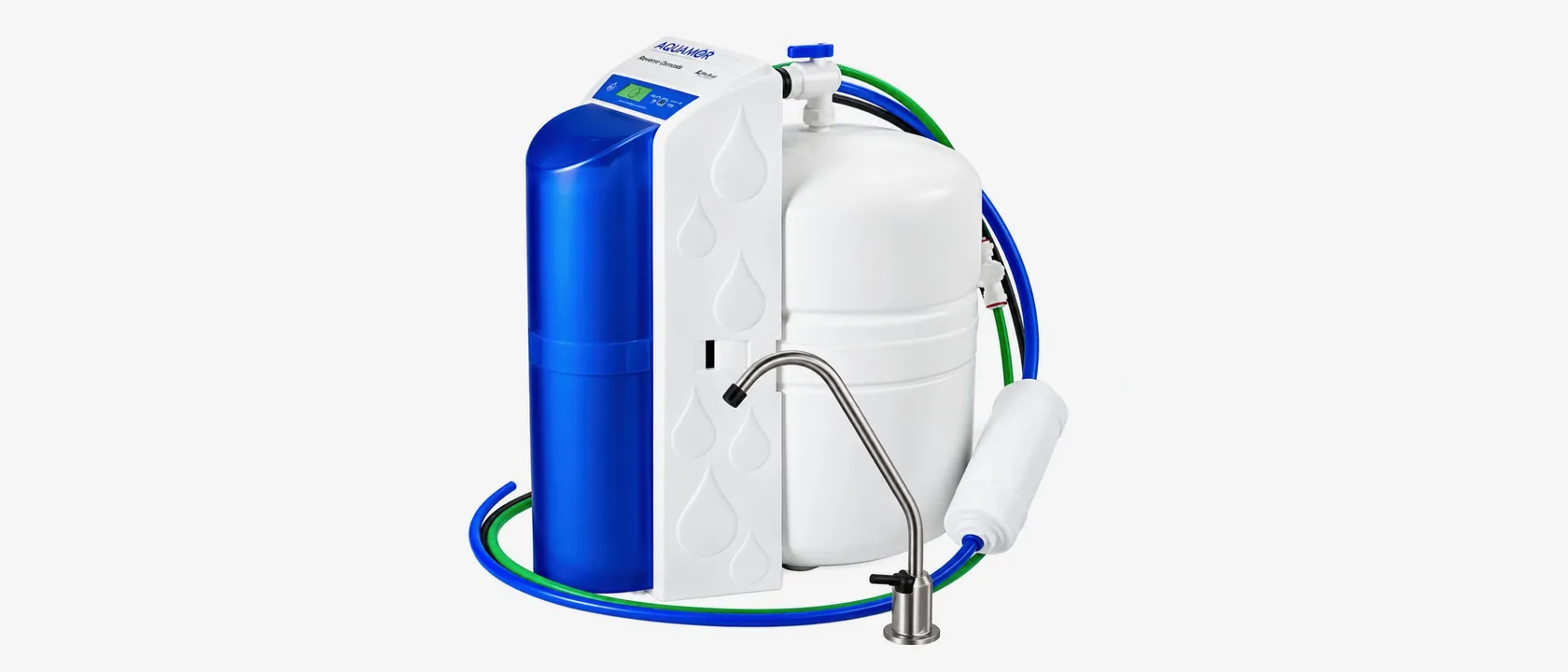
Wellspring is the reverse osmosis system we supply. It sits in the cabinet under the kitchen sink and feeds its own faucet. Four stages live in one sealed cartridge: a 20-micron sediment pre-filter, coconut-shell carbon, the reverse osmosis membrane, then carbon again. A fifth inline carbon stage polishes the water between the storage tank and the faucet.
- Certification — NSF/ANSI 58 for lead, arsenic, fluoride, cysts and total dissolved solids.
- Drinking-water cartridge — the cartridge supplied in the box is separately certified to NSF/ANSI 42, 53, 401 and 372, NSF P473 and CSA B483.
- Storage — a two-gallon tank sits ready behind the faucet.
- Power — none. It runs on household line pressure and shuts off automatically when the tank is full, so it keeps working in a power cut.
- Size — 9.7 inches wide, 13.8 deep and 15.4 tall, and 11 pounds with the tank. No wall mounting or bracket.
- Filter changes — one sealed cartridge you twist out and in, with no tools. About every 12 months behind one of our whole-home suites, and about every 6 months on unfiltered city water.
What it costs
Wellspring is $565 for the equipment, and it is included at no cost with Heritage and Estate. It ships with its owner’s manual and full installation instructions, and any licensed plumber can fit it. Their labor is quoted and invoiced by them, and if you do not have someone, we can give you names in your area. Buying online unlocks monthly payments through Affirm. Systems are built to order, so allow up to six weeks.
Common questions
Does reverse osmosis waste water?
Some of it goes to drain, carrying what the membrane held back. Wellspring’s rated recovery is 26.76 percent, so roughly a quarter of the water fed in comes out as drinking water.
How much drinking water does it make?
14.61 gallons a day under standard laboratory conditions, which is far more than a household drinks. Your real output moves with your feed pressure and water temperature.
Do I need a whole-house system as well?
Not for reverse osmosis to work. Behind a whole-home suite the cartridge lasts about twice as long, because the chlorine and sediment are handled upstream. That is why Wellspring comes with Heritage and Estate, and it pairs with Primary as a separate purchase.
Do you work outside Tulsa?
Walkthroughs cover Tulsa, Rogers, Wagoner, Creek, Okmulgee, Pawnee and Osage counties. Equipment ships to Oklahoma, Texas, Arkansas, Missouri, Kansas, Colorado, New Mexico and Tennessee.
Start with your own water
Fifteen minutes at your sink tells you whether reverse osmosis is worth it for your house, including when the answer is no. Book a free walkthrough and you keep the results either way.
Sources
Every figure in this article comes from the published sources listed above. This is general information, not advice about the water at any particular address.